AMD RDNA 4 Architecture Explained: What Makes RX 9070 Series GPUs Different
AMD's RDNA 4 architecture brings significant improvements to the RX 9070 series GPUs through enhanced raytracing accelerators, doubled L2 cache bandwidth, and 16GB memory configurations that deliver better gaming performance.

AMD RDNA 4 Architecture Explained: What Makes RX 9070 Series GPUs Different
AMD's RDNA 4 architecture powers the new RX 9070 series GPUs with substantial improvements over previous generations. Released on February 28, 2025, these graphics cards feature enhanced raytracing accelerators, doubled L2 cache bandwidth, and 16GB memory configurations designed for high-quality gaming performance. Understanding these architectural changes helps you make informed decisions about GPU upgrades and system optimization.
Core RDNA 4 Architecture Improvements
RDNA 4 represents a focused evolution rather than a complete redesign. AMD concentrated on specific performance bottlenecks from RDNA 3 while maintaining compatibility with existing software ecosystems. The architecture targets the mainstream gaming market with performance positioned between RTX 3000 and RTX 4000 series capabilities.
Enhanced L2 Cache System
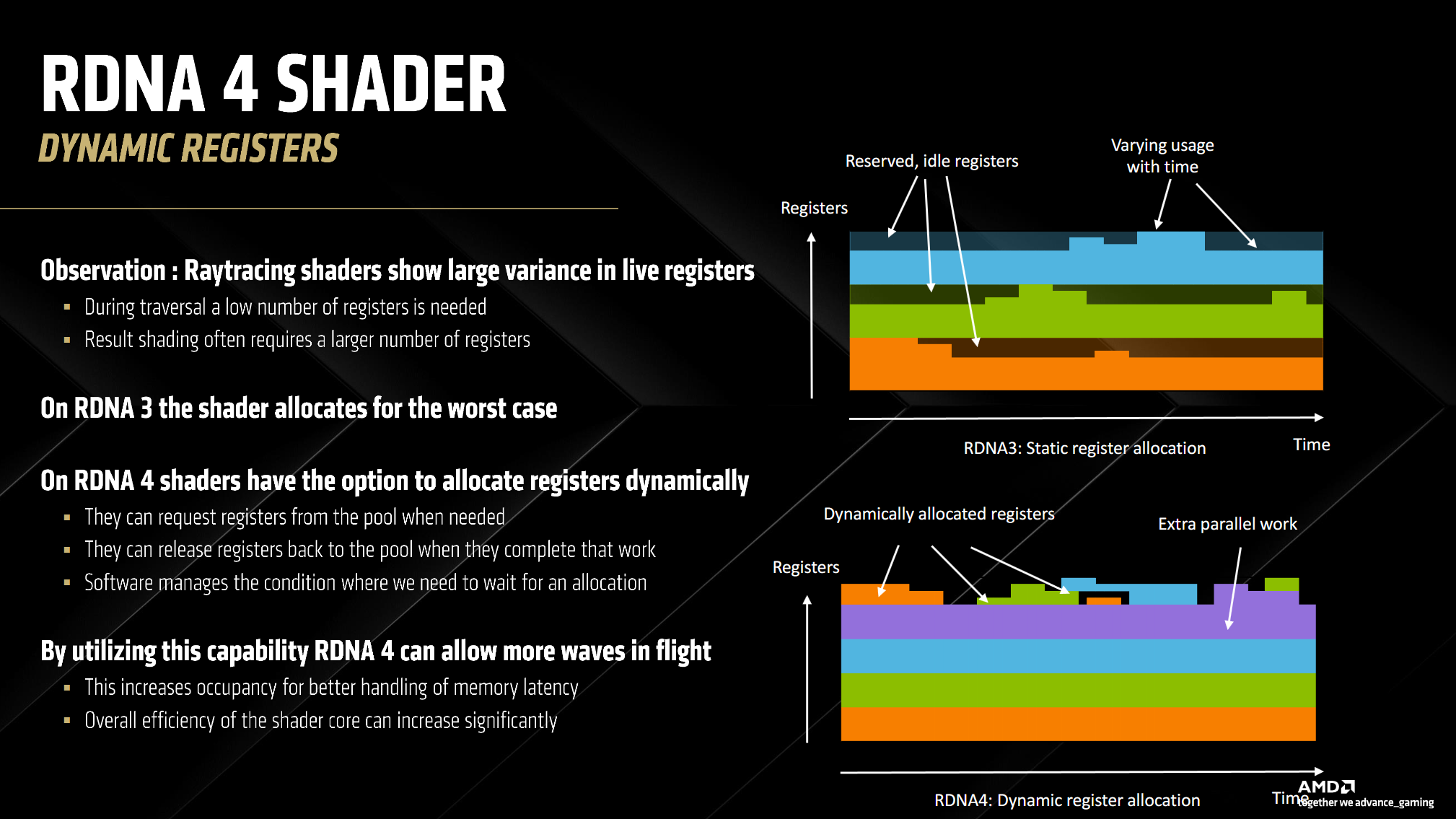
The most significant change in RDNA 4 involves the L2 cache architecture. AMD doubled the number of banks per L2 slice, which directly doubles the bandwidth of each L2 slice and increases the total L2 cache capacity. This improvement reduces memory bottlenecks during complex rendering scenarios and improves frame consistency in demanding games.
The problem
Games experiencing stuttering or inconsistent frame times due to memory bandwidth limitations
The fix
RDNA 4's doubled L2 cache bandwidth provides smoother data flow between the GPU cores and memory, reducing stuttering in memory-intensive gaming scenarios
Revamped Raytracing Accelerators
AMD redesigned the raytracing accelerators in RDNA 4 to improve performance in games with ray-traced lighting, reflections, and shadows. While specific technical details remain limited, early indications suggest meaningful improvements over RDNA 3's raytracing capabilities, though still trailing NVIDIA's RTX 4000 series in pure raytracing performance.
RDNA 4's raytracing improvements focus on practical gaming scenarios rather than synthetic benchmarks, prioritizing playable frame rates with raytracing enabled.
RX 9070 Series GPU Specifications
The RX 9070 series includes two models: the RX 9070 XT and RX 9070. Both cards feature 16GB of memory, addressing one of the main criticisms of previous generation mid-range GPUs that shipped with 8GB or 12GB configurations.
- 16GB GDDR6 memory across both RX 9070 XT and RX 9070 models
- Enhanced compute units with improved efficiency per clock
- Updated display controllers supporting latest HDMI and DisplayPort standards
- Improved power efficiency compared to RDNA 3 equivalents
The problem
Running out of VRAM in modern games at high settings, causing texture streaming issues
The fix
The 16GB memory configuration in RX 9070 series GPUs provides sufficient VRAM headroom for current and near-future gaming at 1440p and selective 4K scenarios
Performance Positioning and Expectations
Based on AMD's own performance data, RDNA 4 GPUs deliver performance roughly equivalent to the RX 7900 XT level, not exceeding the flagship RX 7900 XTX. This positions the RX 9070 XT as a strong 1440p gaming card with selective 4K capabilities in less demanding titles.

Gaming Performance Targets
RDNA 4 targets consistent 60+ FPS gaming at 1440p with high settings in most current titles. The architecture's improvements should provide better minimum frame rates and reduced stuttering compared to equivalent RDNA 3 cards, even when raw maximum FPS numbers appear similar.
The problem
Inconsistent gaming performance with frequent frame drops below 60 FPS at 1440p
The fix
RDNA 4's architectural improvements focus on frame consistency and minimum FPS stability, providing smoother gaming experiences even when average frame rates remain similar to previous generation cards
Which CPUs Work Best with RX 9070 Series GPUs?
The RX 9070 series pairs optimally with modern AMD Ryzen processors on the AM5 platform. For peak performance, the Ryzen 7 9800X3D or 7800X3D provide the best gaming experience due to their large L3 cache. Budget-conscious builders can achieve excellent results with the Ryzen 5 9600X or 7600X without significant performance compromises.
- Ryzen 7 9800X3D or 7800X3D for maximum gaming performance
- Ryzen 7 9700X for balanced performance and value
- Ryzen 5 9600X or 7600X for budget-focused builds
- Ensure adequate PSU capacity (650W+ recommended for RX 9070 XT systems)
QwikTwik's GPU optimization tools can help maximize performance from your RX 9070 series GPU by managing background processes and optimizing system resources during gaming sessions.
RDNA 4 vs Previous GPU Architectures
Compared to RDNA 3, the fourth-generation architecture focuses on efficiency improvements rather than raw compute increases. This approach results in better performance per watt and more consistent gaming experiences, though it may not deliver the generational performance leaps seen in previous architecture transitions.
Key Differences from RDNA 3
- Doubled L2 cache bandwidth improves memory-bound scenarios
- Enhanced raytracing units provide better RT performance
- Improved power efficiency reduces heat and noise
- 16GB memory standard addresses VRAM limitations
- Refined manufacturing process improves yields and availability
Will RDNA 4 Be a Big Upgrade?
RDNA 4 represents an incremental but meaningful upgrade over RDNA 3. The architecture positions itself between RTX 3000 and RTX 4000 capabilities, offering solid 1440p gaming performance with improved raytracing compared to previous AMD generations. While not groundbreaking, the improvements address specific pain points from earlier RDNA architectures.
The upgrade significance depends on your current GPU. Users with RDNA 2 or older cards will see substantial improvements, while RDNA 3 owners may want to wait for RDNA 5, which promises more significant architectural changes including enhanced path tracing capabilities.
Optimizing Windows for RDNA 4 GPUs
RDNA 4 GPUs benefit from specific Windows optimizations to maximize their architectural improvements. Proper driver installation, power management settings, and system configuration ensure you extract full performance from the enhanced L2 cache and raytracing capabilities.
The problem
RDNA 4 GPU not reaching expected performance levels in games
The fix
Install the latest AMD Adrenalin drivers, enable GPU scheduling in Windows Graphics Settings, and configure Windows power plan to High Performance mode to ensure the GPU receives adequate power delivery
Ensure your system meets minimum PSU requirements before installing an RX 9070 series GPU. Insufficient power delivery can limit the GPU's ability to use its architectural improvements effectively.
Will RDNA 4 be a big upgrade over RDNA 3?
RDNA 4 provides incremental improvements focused on efficiency and consistency rather than raw performance increases. Users with RDNA 2 or older GPUs will see significant benefits, while RDNA 3 owners may prefer waiting for RDNA 5's more substantial changes.
What CPU works best with RX 9070 series GPUs?
The Ryzen 7 9800X3D or 7800X3D provide optimal gaming performance with RX 9070 series GPUs. Budget builds can use Ryzen 5 9600X or 7600X processors without significant performance compromises.
Which GPUs use RDNA 4 architecture?
RDNA 4 architecture currently powers the Radeon RX 9000 series, specifically the RX 9070 XT and RX 9070 models released on February 28, 2025.
How much VRAM do RX 9070 series GPUs have?
Both RX 9070 XT and RX 9070 models feature 16GB of GDDR6 memory, providing ample VRAM for current and near-future gaming scenarios at 1440p and selective 4K resolutions.